Please Mind the Gap Between the Living and the Dead: Why Local Ghost Stories Still Matter
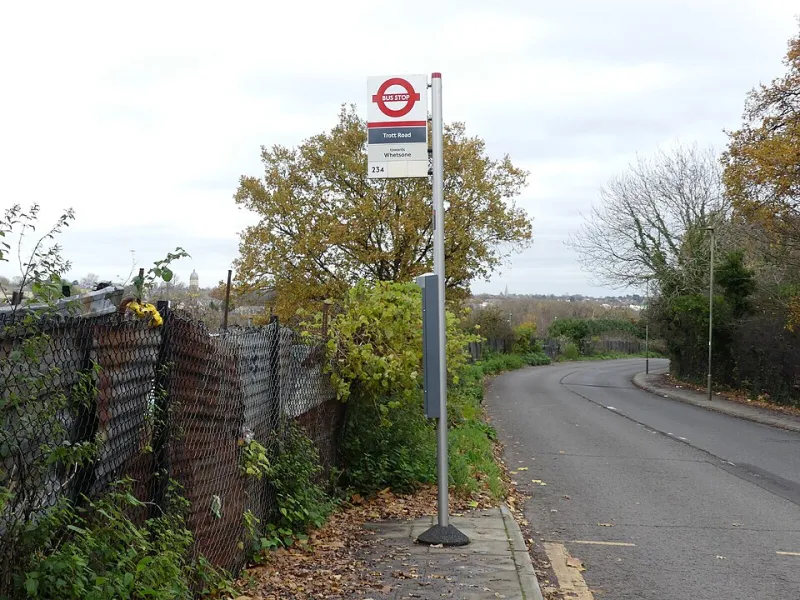
Photo: John Kingdon , CC BY-SA 2.0, via Wikimedia Commons
The 17:42 bus is late. Again. At the shelter on the edge of town, a teenager is scrolling through a feed that has already shown them everything they missed. An older man in a raincoat is holding a shopping bag and looking at the timetable as if it has personally let him down. And then he says, quite casually, you know about the woman in the white coat who gets on here and never gets off. The teenager looks up. That is the moment I want to talk about.
A bus stop is as good as a campfire
We tend to think of ghost stories as something that happens in a forest, around a fire, with a torch under the chin. But most of the good ones I have heard have happened in ordinary places. A bus stop. A pub back room. A kitchen while the kettle boils. A car park after the Christmas lights switch-on. The setting is not the point. The point is that someone decided to say, listen to this, and someone else decided to listen.
That is what local storytelling is. It is not a big production. It is a person with a bit of memory and a bit of nerve. It might be spooky. It might be funny. It might be half true and half the kind of thing that gets better every time it is told. The woman in the white coat might be a nurse from the old hospital, or a passenger from a crash in the 1960s, or simply a story that someone made up to pass the time on a wet Tuesday. It does not matter. What matters is that it belongs to that bus stop and not to a streaming service.
What we lose when the feed scrolls past
I am not going to pretend that scrolling is the enemy of all good things. But there is a difference between a story that arrives from nowhere and a story that arrives from here. The feed gives us the same ghosts, the same jump scares, the same three creepy facts about a house in a country none of us have visited. It is fine. It is also forgettable. The local story is harder to shake because it has a postcode.
When we stop telling local stories, we lose more than a bit of entertainment. We lose a way of holding on to the place. We lose the names of the roads that used to be fields. We lose the pub that used to be a courthouse. We lose the odd, specific detail that makes a town feel like a town and not just a location on a map. We also lose a very easy way of talking to people we do not already know. A story is a low-stakes invitation. You do not have to be friends first. You just have to be in the same room, or at the same bus stop, and willing to listen for five minutes.
In 2026, that feels more valuable than ever. We are quite good at sharing things online. We are less good at sharing things with the person next to us. A storytelling night does not fix that on its own. But it gives it somewhere to happen.
The revival is already happening
You can see it in the small rooms. A pub that puts out an extra ten chairs on a Thursday. A library that stays open late for a winter tales evening. A community centre that runs a story circle once a month and has to move to a bigger room because word got round. There are folklore nights, local history talks, ghost-story evenings and open-mic events where the only rule is that the story has to have something to do with the area.
Some of these are organised. Some are just a few people who agreed to meet. That is the bit I find hopeful. It does not need a grant or a marketing plan. It needs a room, a time and a person who says, I will go first. The revival is not a wave of big events. It is a scatter of small ones, in halls and back rooms and front rooms, in towns that are not famous for anything except being where people live.
How to start a storytelling circle this winter
Pick a room that is easy to get to and free or cheap. A pub back room is good. A library meeting room is good. A community centre, a church hall, a café that closes at six. Ask about access, heating and whether you can bring your own biscuits. Then invite six people. Not sixty. Six is enough to start. If it grows, it grows.
Set a simple shape. Everyone gets five minutes. The theme can be as broad as a local ghost, a family legend, a strange thing that happened on a walk, or a story your nan used to tell. You do not need to write it down. You do not need to perform it. You just need to say it out loud. Keep it kind. No fact-checking, no interrupting, no telling someone their story is not spooky enough. The first few nights will be a bit awkward. That is normal. The awkwardness is part of the charm.
Make it easy to come back. Same night, same time, same room. Put a note in the local Facebook group and on the noticeboard by the post office. Tell the library. Tell the pub. Tell the person at the bus stop. You do not need a campfire. You do not need a costume. You need a kettle and a bit of curiosity.
Keep it local, keep it half-true
The best local stories are not the ones that tie everything up neatly. They are the ones that leave a little space for doubt. Did that happen? Did it happen here? Did it happen to someone your mum knew? That doubt is not a flaw. It is the thing that keeps the story alive. It gives the next person something to add.
So this winter, if you find yourself at a bus stop with time to kill, listen. And if you have a story of your own, tell it. At Nandu, we think our corner of the UK has plenty of them. They are not on a streaming service. They are in the queue, in the pub, in the kitchen, in the rain. They are waiting for someone to say, go on then. I will start.