The Red Box at the End of the Lane Has a New Job
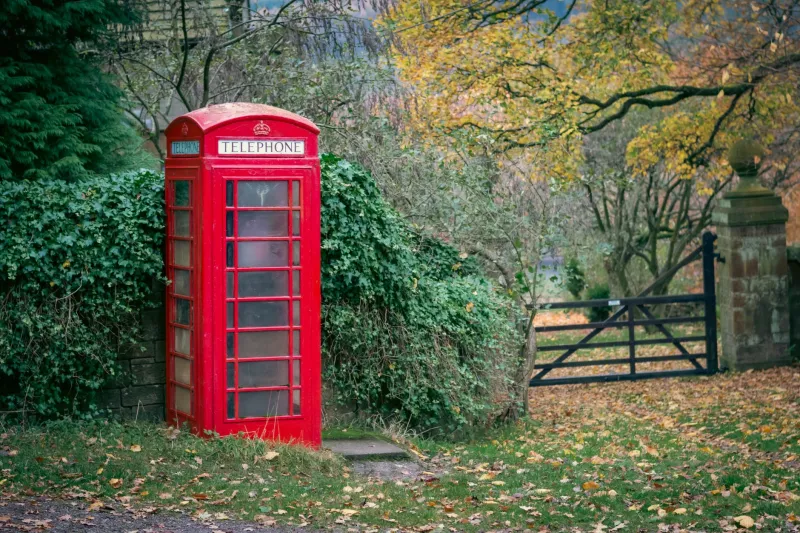
There’s a red phone box at the bottom of a lane near me that hasn’t made a call in years. It has, however, lent me a book, taken two packets of tomato seeds and quietly reminded me that someone in the village is growing marrows whether I like it or not. In 2026, that’s a fairly ordinary arrangement.
We tend to talk about these boxes as relics, which is a bit unfair. A relic implies something finished. The ones still standing at the edge of a green, outside a village hall or beside a bus stop have simply changed jobs. The receiver has gone; the shelf has arrived. The glass still steams up in cold weather. The door still sticks. And the whole thing still runs on the same basic fuel as any good community project: someone noticing that a small space could do a bit more than sit there.
A Very Small Room With a Very Long Memory
The phone box was never just a phone. It was a landmark, a meeting point, a place to shelter from the rain while pretending you had nowhere urgent to be. That’s why repurposing them works so well. You don’t have to teach people where they are. You don’t have to explain what they’re for. You just have to open the door and put something useful on the shelf.
Some are book exchanges. Some are seed libraries, with envelopes of nasturtium, runner bean and calendula arranged in old ice-cream tubs. I’ve seen one turned into a tiny art gallery with a new print every month and a label small enough to make you lean in. Others hold defibrillators, food donations, local maps, knitted hats, or a laminated list of who’s got the key to the church hall. The variety is the point. A phone box is not a building with a planning strategy; it’s a six-foot civic cupboard with a very recognisable roof.
Seeds, Stories and the Etiquette of the Shelf
The etiquette is where it gets interesting. Nobody puts up a sign saying please do not treat this box as a wheelie bin, though many effectively do. The rule is usually some version of: take one, leave one, and don’t leave anything you wouldn’t want to find yourself. Books come back damp if the door is left open. Seed packets turn to mush if they’re not in a tin. Cakes, as a general principle, do not survive a British winter in a glass box.
There is also a hierarchy of stock. The good stuff moves fast. A decent cookbook will be gone by Tuesday. A paperback with a cracked spine may linger until spring. Seed swaps have their own quiet politics: everyone wants the reliable tomato, nobody wants the mystery squash, and there is always one envelope labelled “mixed – possibly courgette” that sits there like a dare.
What makes it work is not the stuff. It’s the small acts of maintenance. Someone wipes the shelf. Someone replaces the notebook. Someone notices the latch is loose and mentions it to the person who knows a person. In a lot of villages, that someone is also the person who opens the box at 7am, because the best time to restock is before the dog walkers arrive.
The Planning Bit Nobody Puts on the Plaque
The survival of these boxes is a small miracle of paperwork. Many are listed buildings, which means you can’t simply drill a shelf into the wrong bit of cast iron. Some are owned by the local authority, some by community trusts, some by parish councils who inherited them along with the bus shelter and a bench with a missing slat. BT’s Adopt a Kiosk scheme, running since 2008, has helped hundreds of communities take on boxes for a nominal sum, but adoption is only the beginning. Insurance, repairs, glass, paint and the question of who empties the box when it fills up all have to be answered by someone.
Then there’s the practical awkwardness. A phone box has no power, no heating and no drainage. Condensation is a constant enemy. So is sunlight, which fades book covers and turns seed labels into blank cards. In winter, the door can swell. In summer, the whole thing becomes a tiny greenhouse. Communities learn to work with this. They use plastic boxes inside the box. They put up a little notice asking people to close the door firmly. They accept that a certain percentage of donated paperbacks will always smell faintly of damp and good intentions.
Why Six Feet Still Counts
All of this matters because the high street is shrinking. Not everywhere, and not in the same way, but enough that people notice. The bank has gone. The library has shorter hours. The bus is less frequent than it was. A phone box can’t replace any of those things, and it shouldn’t pretend to. But it can put a small, free, non-commercial pause in the middle of a day. It can be the place where a child finds a book, where a gardener finds a seed, where someone finds a phone number for a plumber because the noticeboard is full.
That is not nostalgia. It’s maintenance. The box is a reminder that civic life is often made of very small rooms and very ordinary objects, kept going by people who don’t make a fuss about it. The red paint helps, of course. But the real infrastructure is the person who checks the shelf on a Sunday and the neighbour who tells them when the door has stopped closing properly.
So if you pass one this week, have a look inside. Take a book if you’ll read it. Leave a packet of seeds if you’ve got spare. Close the door. And if you see the volunteer custodian, say thanks. They’re running Britain’s smallest community centre, one shelf at a time.