Forty Jugs and a Missing Ladle: The Village Hall Amnesty That Became a Reunion
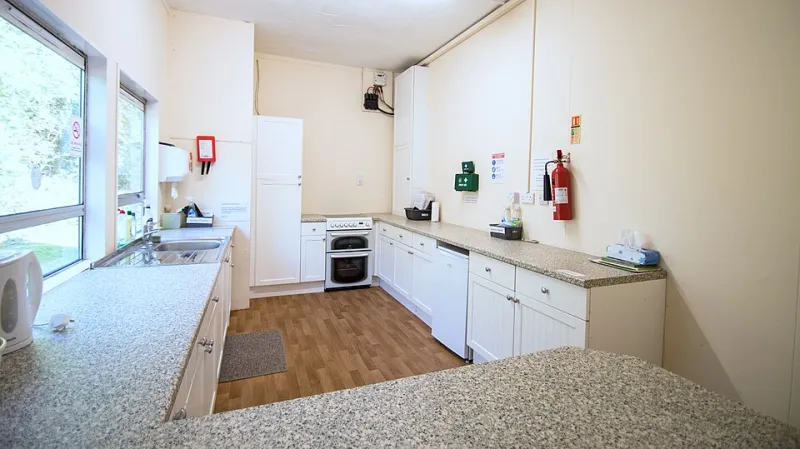
Photo: Little Kazakh Alien, CC BY-SA 4.0, via Wikimedia Commons
On the first Saturday in November, the village hall kitchen looked less like a kitchen and more like the lost property desk at a very polite railway station. There were jugs. There were flasks. There was a casserole dish wearing a luggage tag. And in the middle of it all, a ladle engraved with the name Beryl, which had been missing since a harvest supper in 2019 and had apparently been living in someone's shed.
The amnesty was not a clampdown. It was a notice in the parish newsletter, a cardboard box by the fire door, and a sentence that did a lot of quiet work: no questions, no shame, and no need to explain why you still have the vicar's wife's jug. In 2026, after decades of bring-and-share suppers, funeral teas, jumble sale cake stalls and chutney contests, the hall had finally decided to ask for its kit back. What it got was not just crockery. It was a small, funny, tender archive of village life.
A Cupboard Full of Other People's Kitchens
Every village hall has one: the cupboard behind the serving hatch where the hall's own plates live alongside a shifting population of borrowed dishes. Nobody quite knows where the hall's kit ends and the village's begins. A white Pyrex jug with a chipped lip. A set of mismatched side plates with a blue stripe. Three Thermos flasks, none of which have ever been returned to their owners. A serving spoon that is technically the hall's but has attended more christenings than the vicar.
The committee had tried signs before. Please Return What You Borrow. Please Wash Up. Please Do Not Put the Good Knives in the Dishwasher. The signs had worked about as well as signs usually do, which is to say they had become part of the furniture themselves. So this time they tried something softer. An amnesty. Bring back what you have, keep what you need, and if you cannot remember whether it was yours or ours, bring it anyway and we will work it out over a cup of tea.
The box by the door filled up faster than anyone expected.
The Rules of a Gentle Amnesty
The notice was careful. It did not use the word 'stolen'. It did not use the word 'borrowed' either, because borrowed implies a plan to return, and decades of evidence suggested otherwise. It simply said that the hall was having a tidy-up and would be grateful for the return of any dishes, flasks, jugs, trays or serving implements that had found their way into village homes over the years.
There was a second rule, written in smaller type: if you have something that is not ours, bring it too. Someone might be looking for it.
That second rule turned out to be the whole point. By the end of the first week, the box had produced a child's plate with a rabbit on it, a gravy boat with a hairline crack, four lids with no corresponding tubs, and a serving dish that had been used as a paint pot and still had a ring of emulsion around the rim. Each item came with a story, delivered in the slightly embarrassed tone of someone returning a library book twelve years late.
One woman brought back a flask she had taken to a funeral in 2014 and had never returned because it felt rude to hand it back to a grieving family. A man produced a jug that had been in his mother's cupboard since before he was born, along with a note that said simply: 'I think this is the hall's. Sorry.' A child returned a cake tin with a slice of very old Christmas cake still inside it, which was examined with the respect usually reserved for archaeology.
The Lid With a Name on It
Somewhere in the middle of the amnesty, a lid turned up with a name written on masking tape. Not the hall's name. Not a family name. Just 'Margaret' and a date from 1998.
This was the sort of discovery the committee had half hoped for and half dreaded. A labelled lid is a small, stubborn thing. It suggests a person who took the trouble to mark what was theirs. It suggests a time when the hall's kitchen was busy enough that labels mattered. It also suggests that Margaret, whoever she was, had once stood at the sink with a roll of tape and a pen, making sure her dish would come home.
It did come home, eventually. Margaret's daughter collected it on a Wednesday morning and stood in the hall for a while, holding the lid, not saying much. She took away a serving dish that had been in the box since week one. The committee did not ask how it had got there. That was the rule.
The Things Nobody Claimed
Not everything went home. By the end of the month, a small collection remained: a cracked jug, two odd tumblers, a tray with a faded advertisement for a brewery that no longer exists, and a plastic tub with no lid and no label. These were not failures. They were the leftovers of a very long shared meal, and there was something oddly comforting about them.
The committee put them on a shelf with a handwritten sign: 'If this is yours, take it. If it is not, leave it.' A week later, the tray had gone. Nobody saw who took it. Nobody minded.
What the Amnesty Actually Measured
A dish amnesty sounds like a joke about Tupperware, and in part it is. But it is also a way of measuring something harder to see. A village hall's kitchen is one of the last places where you can borrow a plate without signing anything, where trust is assumed rather than audited, and where the return of a jug is not a transaction but a small act of belonging.
The amnesty did not fix the cupboard. There are already new dishes in it, and new flasks, and a serving spoon that is definitely not the hall's. But the box by the fire door is staying. It has a new label now, written in careful capitals: 'Returned. Please add yours.' In a village that has spent years borrowing each other's crockery, that feels about right.