Salt & Vinegar at Midnight: The Quiet Club at the End of the Timetable
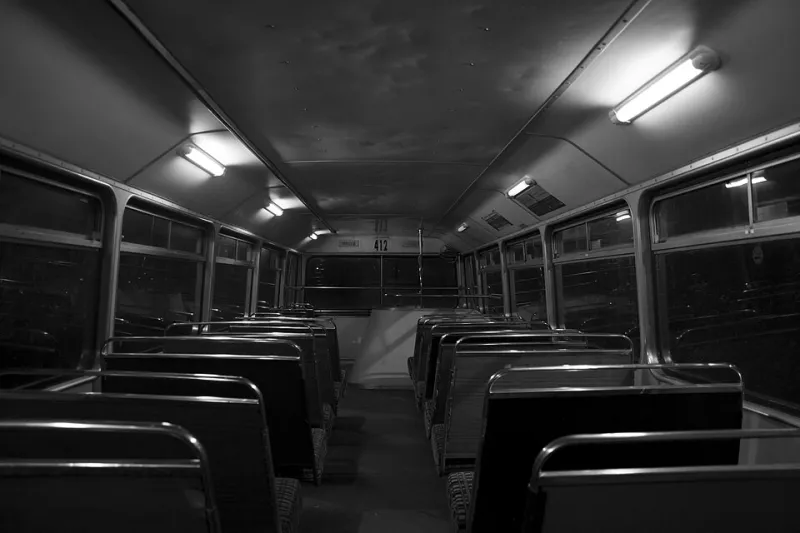
Photo: Jeremy Segrott from Cardiff, Wales, UK, CC BY 2.0, via Wikimedia Commons
The bus bay behind the market square is not a place you would choose to linger. There is a draught that comes from nowhere, a bin with a loose lid and a timetable that has been rained on so many times it looks like a pressed flower. But at twenty past eleven on a Friday, it becomes the most sociable spot in town.
That is when the regulars start to gather for the 11.40. Not all at once. They arrive in ones and twos, each with their own small ritual: the hospital cleaner with her feet up on the low wall, the karaoke stragglers still humming something from the last chorus, the lad who always brings crisps and offers them round like a host at a very small party. Nobody has organised this. Nobody needs to. The timetable does it for us.
The Platform That Learns Your Name
I started riding the 11.40 in late spring, mostly out of curiosity. I had heard that the last bus had a character of its own, the way some pubs do. What I found was less dramatic and more useful: a group of people who had quietly worked out how to be alone together.
Within a fortnight, I knew the cleaner was called Marie and that she had a nephew in Leeds. I knew the karaoke pair, Bev and Cath, would argue about whether the last song should be ABBA or something with a bit more grit. I knew the crisp lad, Ryan, kept a spare bag of salt and vinegar in his jacket because he had once been caught short on a cold night and had never forgotten it.
None of this was friendship in the full sense. It was something smaller and more portable. A nod. A shared complaint about the driver's braking. A low-level checking in that happened without anyone calling it that.
A Crew With No Rota
The 11.40 is the last service out of our market town. It runs through the villages, past the retail park, along the long dark stretch where the streetlights give up, and then into the smaller stops where people get off and disappear up driveways. On paper, it is a route. In practice, it is a shift change, a closing time and a last orders all rolled into one.
You can tell what kind of night it has been by who is on board. After a quiet Tuesday, there might be four of us. After a wedding or a works do, the back seats fill with people carrying their shoes and speaking in the exaggerated whispers of the slightly merry. The bus absorbs all of it. It is not a place for making a scene. It is a place for getting home.
The driver, on most of the nights I rode, was a man called Des. He did not join in, exactly, but he kept the temperature right. He waited at the stop near the hospital even when the clock said he should not. He knew which passenger needed the light on at the back and which one would fall asleep if the heating was too high. Small things. But small things are what a route is made of.
The Lad With the Crisps
Ryan is twenty-three and works in a kitchen. He gets the 11.40 because his shift ends at eleven and the walk home is forty minutes he would rather spend sitting down. The crisps started as a joke. Someone said the bus needed a snack trolley, and the next week he brought a multipack.
Now it is a thing. Not every night, but often enough that people look for him. He does not make a fuss about it. The bag gets passed around, and whoever takes one says thanks, and that is the whole ceremony. It is the least glamorous social club in Britain, and it works.
I asked him once why he bothered. He shrugged and said, 'It makes the journey shorter.' That is the best explanation of community I have heard all year.
What the Review Actually Threatens
In 2026, the route is being reviewed. The phrase in the consultation is 'passenger viability', which sounds like something from a spreadsheet and feels like something from a spreadsheet too. The operator says numbers have not recovered to where they were before the pandemic. The council is looking at where the subsidy goes. There are maps with coloured lines and a survey that asks how often you use the service and whether you could travel at a different time.
The trouble with 'a different time' is that it assumes the 11.40 is just a bus. For Marie, it is the difference between a twenty-minute ride and an hour and a half of night walking. For Bev and Cath, it is the only sensible way to get home after a late choir practice. For Ryan, it is a small kindness at the end of a long shift. None of that fits neatly into a box on a form.
I am not naive about money. Buses cost. Routes have to be paid for. But there is a kind of accounting that never makes it into the consultation: the value of a place where people recognise each other, even lightly. The 11.40 is not a service that builds a community in the shiny, funded sense. It is a service that lets one exist.
A Timetable Is a Promise
On my last ride of the six months, the bus was late by seven minutes. Nobody complained much. We stood in the cold and talked about the weather, the roadworks and a rumour that the 11.40 might become a 11.15. Des pulled in, opened the doors and said, 'Evening, all.' It was the same as it always was.
I got off at my stop and watched the bus carry on into the dark. It is easy to romanticise a timetable. But the truth is simpler. A last bus is a promise that the day does not have to end badly. It says: there is still a way back. If the review takes that away, it will not just remove a service. It will close a small, accidental club that has been meeting every night for years, without a membership fee, a committee or a single minutes of formal notice.
And I will miss the crisps.