The Little Green Light Beside the Jam Jar
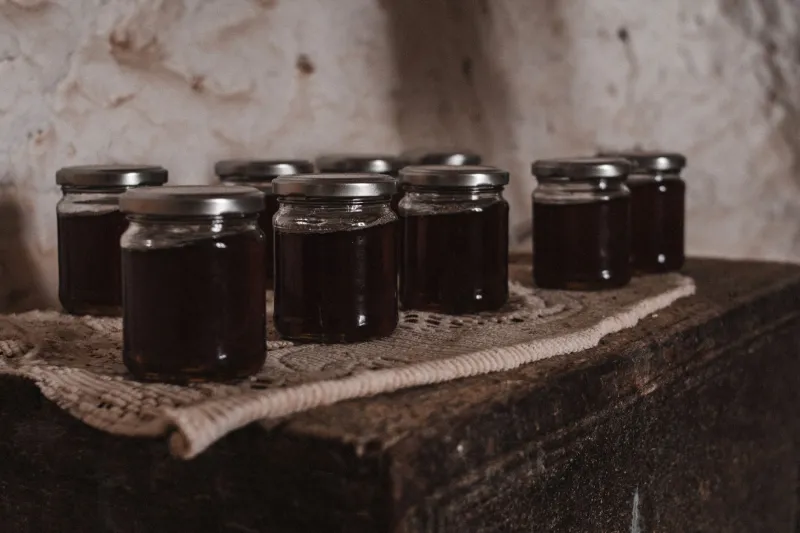
On a lane just outside a village that shall remain nameless, because the owner likes it that way, there is an egg stand. It is not a shop. It is a plank, a cool box, a handwritten sign and a jam jar. The sign says £1.50 a half dozen. The jar says thank you. For years, that has been the whole system: take your eggs, leave your coins, trust the next person to do the same. This autumn, beside the jar, there is also a small contactless card reader. It has a little green light. The green light is doing more than taking payments. It is asking a question.
The unwritten rules of the roadside till
Honesty boxes are one of the quiet wonders of the British roadside. You will find them at farm gates, on garden walls, at the end of drives and on tables outside parish halls. Eggs, potatoes, rhubarb, plant cuttings, spare tomatoes, jars of jam, sometimes a cake under a tea towel with a note saying please leave the tub. The stock changes with the season and the weather. The prices are written in marker pen. The float is whatever was in someone's pocket on Friday.
The etiquette is unwritten but widely understood. You pay what the sign says. If you have no change, you either wait, buy something smaller or come back. You do not take the jar. You do not help yourself to the float. You close the lid properly. If the tub has blown over in a gale, you weight it down with a brick. If you know the person who runs it, you might mention the eggs were lovely next time you see them. If you do not know them, you leave the correct money and take your eggs and that is that. The transaction is small, but it is not nothing. It is a little test of collective decency, repeated several hundred times a week in places nobody is watching.
When the buyer has no coins
Here is the awkward truth of 2026: plenty of us no longer carry cash. Not because we are against it, but because the bus takes a card, the café takes a card, the car park takes an app, and the twenty-pound note in the wallet has been there since a wedding in another county. You arrive at the egg stand, you want eggs, and you have no coins. In the old arrangement, you would drive on, slightly annoyed with yourself. With a card reader beside the jar, you tap and take your eggs.
For the buyer, it is a small convenience. For the seller, it is often a practical decision rather than a philosophical one. Eggs are perishable. Rhubarb does not wait. A cake box that sits until Tuesday is not a cake box any more. If a card reader means four more sales a week and fewer wasted eggs, it is not hard to see the logic. The reader also removes the problem of the float running out, or the jar being emptied by someone with less honest intentions. It is weatherproof, or at least weather-resistant. It can be fixed to the table. It does not need exact change.
But it does need a signal, a battery and a small fee. Those are the new practicalities of the roadside till. A jam jar needs nothing but a brick to keep it down.
The seller's sums
Talk to people who run these stands and you hear a familiar mix of pragmatism and mild regret. The regret is not really about technology. It is about the little rituals that go with cash. The ledger notebook, for instance, where some sellers ask buyers to write down what they took if they have no change. The notes are always a bit damp. The handwriting is always a bit hopeful. The notebook is a record of trust, not just stock.
Then there is the pleasure of the jar itself. A good jam jar has history. It has held jam, then coins, then a season of honesty. It has been rained on. It has blown over. It has been retrieved from a hedge. It is not efficient, but it is personal. A card reader is none of those things. It is a neat little machine that does exactly what it says, and no more.
Some sellers now offer both. The jar stays for those who like it, the reader sits beside it for those who need it. That seems to be the compromise of the moment. The unwritten rule becomes a written one: pay by cash or card, but pay. The green light is not replacing the jar so much as joining it.
What the jar still knows
The honesty box was never really about money. It was about the assumption that most people are decent most of the time. That assumption is still there, even when the payment method changes. A card reader does not erase it. It just asks the same question in a different language.
The risk is that convenience nibbles away at the small ceremony of it. If every roadside stand becomes a frictionless tap, we might lose the pause — the patting of pockets, the borrowing of a pound from a passenger, the mental arithmetic, the little moment of contact with a place and its people. We might also lose the ledger notebook, and that would be a shame. There is something quietly lovely about a page of scrawled IOUs from strangers who trusted each other enough to write them down.
But the alternative — stands closing because nobody has cash — is worse. A village without an egg stand is a village with one fewer small, decent transaction in it. So perhaps the little green light is not the villain of the story. It is just the latest character at the roadside. The jar still sits there. The sign still says £1.50. The eggs are still warm from the henhouse, or at least cool from the shed. And somewhere in a kitchen, someone is deciding whether to leave the correct change or tap a card and hope the signal holds.
Here at Nandu, we are not against the green light. We just want the jar to keep its place beside it. Trust is a flexible thing. It can survive a card reader. It just needs someone to keep weighting down the tub when the wind gets up.