Chalk, Props and Pocket-Sized Theatre: Why Britain’s Shop Windows Still Stop Traffic in 2026
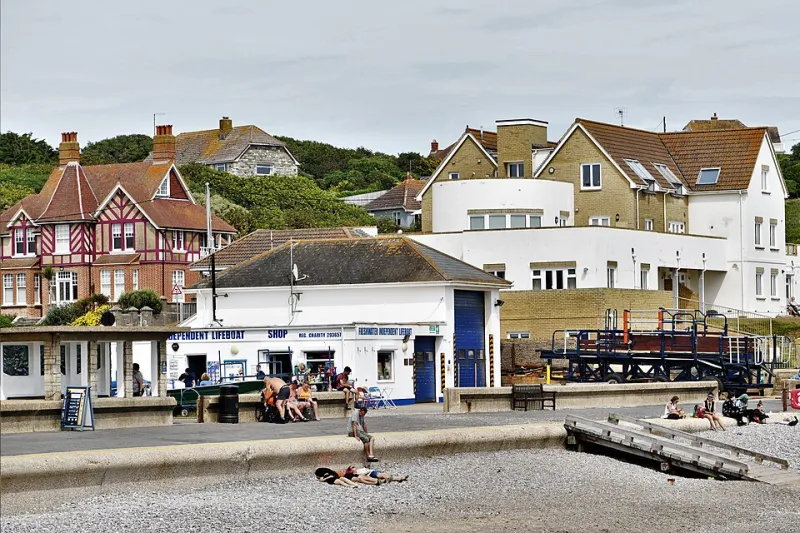
Photo: Michael Garlick , CC BY-SA 2.0, via Wikimedia Commons
There is a hardware shop window I keep walking past. It has a pyramid of seed trays, a mousetrap balanced on a paint tin, and a handwritten sign that says ‘If you need it, we probably have it. If we don’t, ask Dave.’
It is not clever. It is not Instagram-ready. But it stops me every time.
This is not a review of retail. It is a field guide to a particular species: the independent shop window that still bothers to tell a story. In 2026, when so much of the high street is optimised, templated and lit within an inch of its life, these windows feel like small acts of defiance. Or maybe just small acts of habit. Either way, they are worth noticing.
I have been loitering with a notebook in one corner of the UK — the market towns and coastal lanes of Norfolk and Suffolk — asking shopkeepers why they still chalk, prop and rearrange. The answers are practical, sentimental and occasionally very funny.
The window as a small stage
A good shop window is pocket-sized theatre. It has a beginning, a middle and a punchline. It says: we are open, we are here, and we have a personality.
‘It is the only advertising we can afford,’ says Ruth, who runs a bakery in a small market town. ‘But it is also the thing that makes people smile before they come in. If they smile, they might buy a loaf.’
Ruth changes her window every Monday. In October 2026 it was a heap of squashes and a chalkboard reading ‘Soup weather. Finally.’ By the first week of November it had moved on to knitted poppies and a tray of parkin. ‘Christmas is already clearing its throat,’ she says. ‘I will be doing snowflakes before you know it.’
Field guide: five shopfront species
1. The chalkboard philosopher
This window comes with an A-board on the pavement, usually handwritten, often punning. It may comment on the weather, the football or the price of eggs. It is the closest thing many high streets have to a local newspaper column.
‘People read the board before they read the window,’ says a bookseller in a coastal town. ‘They come in and tell me they liked the joke. Then they buy a card.’
2. The seasonal prop merchant
Pumpkins in autumn. Knitted poppies in November. A small, sad reindeer in December. This window is not subtle, but it is reliable. It marks the year. It gives children something to point at.
3. The hand-painted heritage window
Gold leaf, careful lettering, a signwriter’s steady hand. This is the old-school species, often found above a butcher, a jeweller or a proper hardware shop. It says: we have been here a while, and we plan to stay.
4. The useful clutter
This window doubles as a shed. There are brooms, buckets, bird feeders and a stack of egg boxes. Nothing matches. Everything is for sale. It is chaotic in a way that feels oddly reassuring.
5. The bookshop brain
A row of staff picks, each with a handwritten review. A queue of novels arranged like a bus stop. A single copy of a local history book facing out, as if it is waiting for the right person.
What makes a great window?
I put the question to half a dozen shopkeepers. Their answers overlap more than you might expect.
‘One thing that stops the eye,’ says Ruth. ‘One thing that makes people look twice. And one thing that makes locals nod.’
A florist tells me it is about generosity. ‘Do not fill every inch. Leave a bit of air. People need somewhere to rest their eyes.’
A butcher says it is about trust. ‘Clean glass. Clear prices. A bit of parsley. That is it.’
A charity shop volunteer says it is about stories. ‘We put out a wedding dress once and it was gone in an hour. People like to imagine who wore it.’
And Dave, of the hardware shop, says: ‘It is about putting the mousetraps where people can see them. Nobody comes in for a mousetrap if they do not know you sell mousetraps.’
The economics of bothering
Let us be clear: a lovely window will not fix empty units, high rents or a bus service that stops at 6pm. High streets are complicated. Retail is hard. A chalkboard is not a policy.
But a window changes the terms of the conversation. It says a place is inhabited. It says someone has made an effort. It gives passers-by a reason to stop, and a stopped passer-by is halfway to being a customer.
‘People photograph the window and put it on Facebook,’ says one shopkeeper. ‘That is free advertising. I do not understand it, but I will take it.’
There is also the quieter economics of morale. A high street where every window is a printed poster for a closing-down sale feels like a place giving up. A high street with a wonky pumpkin and a sign about soup feels like a place still trying.
A small act of civic optimism
In 2026, folklore is not just the ghost stories we tell about old buildings. It is the running joke on the bakery chalkboard. It is the name of the shopkeeper’s dog on a handwritten sign. It is the knowledge that the hardware shop has a drawer of obscure screws and a man called Dave who will find them.
These are small things. But small things are what a high street is made of.
So next time you pass a window that has been arranged with care — or with cheerful chaos — stop for a second. Read the chalk. Notice the props. Go in and say thank you. Buy a loaf, a book, a mousetrap.
The window is not just a shopfront. It is a little bit of local theatre, performed daily, for free.