Please Do Sit Down: The Brass Plaques Keeping Ordinary Lives in View
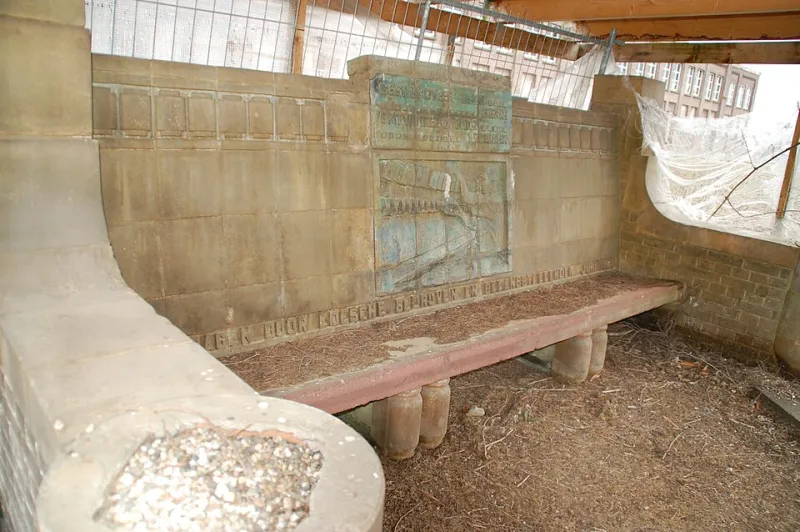
Photo: P.J.L Laurens, CC BY 3.0, via Wikimedia Commons
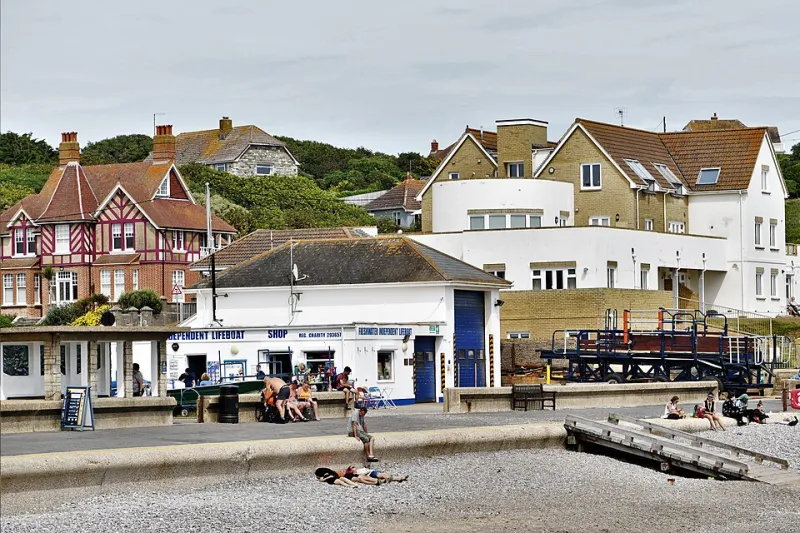
There is a bench on a promenade in North Yorkshire, facing out to a grey sea, with a plaque that reads something like: For Ron, who fished this wall for forty years and never caught anything worth photographing.
I don't know whether that's the exact wording. It doesn't matter. You will have seen its cousin a hundred times. Every seafront, park, canal towpath and village green in the country has one, and each of them is doing an odd and rather beautiful job: turning a piece of public furniture into a life, in about fifteen words.
The smallest kind of monument
We are, as a nation, fairly restrained about grief in public. We do plaques on buildings if you were famous, and headstones if you weren't, and in between there is this gap that the memorial bench has quietly filled.
Nobody quite planned it. Councils and park departments started offering benches as dedications decades ago — you pay for the bench or make a donation, you get a plaque, and your person gets a place to be remembered that happens to be somewhere they liked to be. Then, during and after the pandemic, the numbers surged. When funerals were restricted and gatherings were impossible, a bench in the open air became one of the few ways a family could put someone somewhere.
Now there are thousands of them. A coast path alone can carry forty in a mile. And because they are outdoors, unsentimental and free to use, they have developed their own customs.
What the plaques actually say
The romantic assumption is that memorial benches are for the grand departed — the headmaster, the councillor, the man who ran the garage. In fact, the small brass plate is a great leveller, and its favourite subjects are people who spent a lot of time sitting down.
Fishermen. Dog walkers. Nanas who did the same circuit of the park every day at the same time. Bus-stop conversationalists. A woman who fed the swans and was, by all accounts, a menace about it. Lads who loved this view. A couple who met on this pier.
The wording divides roughly into three camps. There's the plain and devotional — In loving memory of, name, dates, nothing else. There's the descriptive, which tells you who they were in a clause: who walked this path every morning, rain or shine. And then there's the joke, which is the rarest and the best, and which almost always involves a dog.
The etiquette of sitting with someone else's grief
People get strangely anxious about this. Is it allowed? Do you have to ask?
Yes, it's allowed. It is a bench. That is the entire point.
A few gentle rules, assembled from conversations with park wardens and habitual bench-sitters:
- Sit. The person being remembered liked sitting here. They would, in almost every case, rather you did too.
- Don't hog it on a busy seafront. A memorial bench is public seating first and a shrine second. If someone is hovering, shuffle up.
- Mind the wet dog. Enough said.
- Leave it as you found it. If you want to leave a small stone, a flower or a shell, do — plenty of people do, and councils generally tolerate it. Bin your chip paper.
- Don't photograph the plaque for someone else's feed without thinking. A person's name and dates under a lamp post is a strange thing to make content out of.
- Read it out loud, quietly, if you like. A surprising number of people do this. The names get said again. That's not nothing.
Who gets a plaque, and who quietly doesn't
Here is the less cosy part. A dedication is not free. Depending on the council, a bench and plaque can cost anywhere from a few hundred pounds into four figures, and popular locations have waiting lists or are closed to new dedications altogether. That means the memorial bench, for all its democratic charm, is skewed towards families who can afford it and who know the form exists.
It also means benches are under pressure in a different way. Maintenance budgets are tight, and several local authorities have reviewed, replaced or removed benches in recent years on safety or upkeep grounds — sometimes with little warning to the families who dedicated them. If you have a bench in your family, it is worth knowing which department looks after it, and worth joining the friends-of group for the park if there is one.
Five benches worth a slow sit this winter
A bench list, like a bench, is best kept simple. These are types rather than treasures — you'll find one within walking distance of almost anywhere.
- The sea-facing promenade bench. Best in a hard wind, when the sea is the colour of a bin bag and you have a flask. Bring a coat with a hood and no expectations.
- The canal towpath bench, Midlands. Placed with real optimism, often facing a lock. Watch one narrowboat go through and you've had your afternoon.
- The city park bench under the big tree. Sheffield, Leeds, Bristol, Glasgow — every one has a veteran tree with a bench beneath it. The plaques here are the most crowded and the most fond.
- The village green bench by the war memorial. Particularly in early November, when the wreaths are still fresh and the light goes at half four.
- The viewpoint bench at the top of the hill you nearly didn't climb. There is always one, and it is always dedicated to somebody who walked up here every Sunday for thirty years. Sit until your breathing settles.
How to nominate a bench
If you know a bench that could use a friend — one with a view, a bit of shelter, a plaque that's gone green with age — you can usually do something about it. Write to the parks or highways department of whichever council owns the land, with the location, a what3words reference if you can, and a sentence on why it matters. Ask about adoption schemes, cleaning days and the friends-of group. Small attentions keep benches in the budget.
And if there's someone in your life who ought to be remembered this way, ask now, while the waiting list is short and the light is good.
Sit down, then
On a cold afternoon in February, a memorial bench is possibly the least glamorous monument in Britain. It is wet. It has been used by gulls. Somebody has carved something into the armrest.
And then you sit, and read the little plate, and learn that a man called Ron once stood on this wall for forty years with a rod and a flask and no luck at all — and for the length of a cup of tea, he is back in the world.
Go and sit on one this winter. Take the long way home.