Order, Order, and a Plate of Bourbons: Notes From the Back Row of the Village Hall AGM
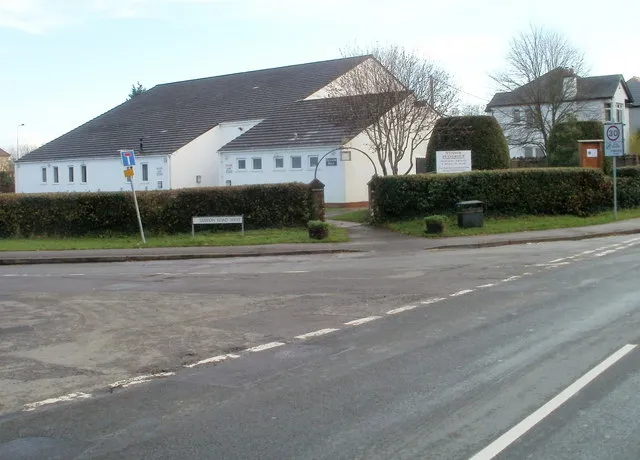
Photo: Jaggery, CC BY-SA 2.0, via Wikimedia Commons
There are twelve chairs arranged in a loose horseshoe, and by ten past seven, eleven of them have people in them. The twelfth is being used as a side table for the urn. This is, by village standards, a solid turnout. The agenda is printed on paper that has been photocopied so many times the heading reads like a rumour, and there is a plate of Bourbons doing the rounds before anyone has formally said a word. It is the annual general meeting of the village hall, and it is the most revealing night in the local calendar.
The Quorum and the Biscuit Arithmetic
Every AGM begins with a small piece of theatre: the chair asks whether the meeting is quorate, and everyone counts the room in a way that is deliberately casual. In 2026, the quorum is eight. There are eleven of us. A man at the back says, “Well, that’s the excitement over,” and the treasurer laughs into his mug.
The biscuit plate tells its own story. Bourbons on the left, custard creams at the back, and a small stack of rich tea that nobody touches until the second half. There is a quiet etiquette to it — take one, leave the plate within reach, never take the last custard cream without asking. The same etiquette governs the meeting. Nobody wants to be the first to raise the difficult item, and yet everybody knows it is coming.
Item Four: The Kitchen Clock (Again)
The kitchen clock has been on the agenda for four consecutive years. It runs eleven minutes fast, which is fine for a coffee morning and less fine for a wedding reception. Someone proposes replacement. Someone else points out that the clock was donated in memory of a former caretaker whose name is still on a brass plaque by the door. There is a pause. Then a suggestion: what if the clock is kept, but a small note is placed beneath it, explaining the eleven minutes? “So it’s a feature, not a fault,” says one woman, and the room laughs in a way that suggests this is not the first time the phrase has been used in this hall.
This is the AGM in miniature. Nothing is ever just a clock. It is a memory, a budget line, a question of who gets to decide, and a small test of whether the community can agree without anyone leaving the room feeling bruised. By the end of item four, the clock stays, a note is agreed, and the caretaker’s plaque is dusted by the secretary before the next meeting. Nobody says it out loud, but it feels like a win.
The Money Conversation Disguised as a Spreadsheet
The treasurer’s report is where the village hall AGM gets serious without ever losing its manners. Hire rates are up for review. In 2026, the energy contract has done what energy contracts do, and the insurance renewal has arrived with the kind of figure that makes the room go quiet. The treasurer reads the numbers slowly, then says, “We can absorb it this year, but not if the boiler goes.”
A discussion follows about whether to raise the hourly rate for private parties, or just for parties that leave the kitchen in a state. Someone suggests a deposit scheme. Someone else points out that the toddler group can barely afford the current rate, and the room shifts in its chairs. The solution, when it comes, is typically improvised: a small increase for evening hires, a separate “community rate” for regular local groups, and a request that everyone please, please stack the chairs properly afterwards.
It is not a spreadsheet decision. It is a values decision dressed up as arithmetic. The hall survives because people are willing to argue gently about money in public, and then make the tea.
Who Volunteers, and Why It’s Not a Mystery
There is an item on the agenda called “Officers and Committee.” This is where the real business of the evening happens. The chair is standing down after six years. The secretary is staying on, but only if someone helps with the minutes. The bookings secretary has been doing the job from a paper diary and a mobile phone that predates the pandemic, and would like, very politely, to stop.
What follows is not a stampede. It is a slow, good-humoured negotiation. A retired teacher offers to take the bookings if the system moves online. A younger resident, who joined the committee in 2026 after a quiz night, offers to set up a shared calendar and a QR code for the minutes. The chair looks at the QR code proposal with the expression of a man being asked to fly a plane, then says, “As long as I don’t have to scan anything.”
This is how it works. Not with grand gestures, but with small, specific offers. Someone will do the minutes if someone else makes the tea. Someone will take the bookings if the software is simple enough. The hall is not kept alive by a mysterious spirit of community. It is kept alive by twelve people in a horseshoe, agreeing to do one more thing than they did last year.
A Show of Hands, and the Real Business
By half past eight, the agenda is nearly done. The clock stays. The hire rates change a little. The defibrillator grant application is approved, and someone volunteers to chase the paperwork. There is a brief discussion about whether the Christmas fair should have mulled wine again, given the new insurance wording, and it is agreed that it should, but in mugs, not glasses.
Then the chair asks for any other business. A hand goes up at the back. “The urn,” says the man who has been quiet all evening. “It’s getting temperamental.” There is a collective sigh, the kind that is not quite annoyance. The urn is added to the list. The list is now two items long: the urn and the note for the clock. It will be a busy year.
Outside, the car park is dark and the church tower is just visible against the sky. People drift off in pairs, still talking about the insurance, the boiler, the quiz night. The AGM is over for another year. Nothing dramatic has happened. And yet everything has: a community has sat down together, looked at its own small accounts, and decided to carry on. The twelfth chair is folded away, the Bourbons are wrapped for next time, and the village hall — eleven minutes fast, slightly drafty, entirely necessary — gets ready for another year.