The Hands That Run Ahead: A Year With the Clock Above the Stage
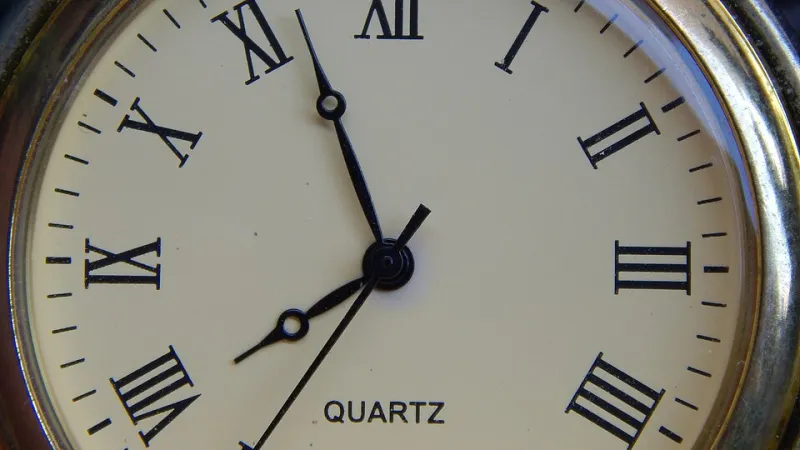
Photo: Edvaldo LL Souza, CC BY-SA 4.0, via Wikimedia Commons
The clock above the stage at Bramble Hill Village Hall is ten minutes fast. It has been ten minutes fast for as long as anyone can remember, and possibly longer. On a wet Tuesday in November 2026, with the tea urn clicking and the quiz master shuffling answer sheets, it is still ten minutes fast. Nobody is fixing it. That is not laziness. That is policy.
You can see the clock from the back row, if the strip light behaves. It has a plain white face, black numerals and a second hand that moves with the slight hesitation of a thing that has seen a lot of jumble sales. It was given to the hall after the war, according to a small plaque nobody reads, and it has been supervised ever since by a rotating cast of volunteers who take the winding key far more seriously than they take most committee business.
The Winding Rota
There is a rota. It lives in the cupboard with the spare loo roll and the laminated fire drill. Names go on in pencil, because names change. The current keeper of the key is Derek, who is not on the committee but is the sort of person who ends up doing the job anyway. He comes on a Thursday, winds the clock, checks it against his wristwatch and then adds ten minutes. He does not add ten minutes because he is confused about how clocks work. He adds ten minutes because the hall has agreed, without ever formally agreeing, that the clock should run ahead.
When Derek was away in the spring, a newer volunteer wound it and set it to the correct time. There was a general sense of unease. The quiz started late. The raffle felt rushed. Someone said the room felt 'a bit sharp', which is village-hall speak for a change nobody asked for. By the following Thursday, the clock was ten minutes fast again. Derek says he cannot remember doing it. Everyone knows he did.
A Jumble Sale Runs on Hope
Take the autumn jumble sale. Doors are advertised for ten. The clock says ten past ten when the first cars arrive, which means it is really ten o'clock. This is not a trick. It is a buffer. The organisers know that people will turn up early, that the urn takes twenty minutes to get going, and that the table with the good coats needs one last sort. The clock gives everyone permission to be a little late without anyone having to apologise.
By half past ten, the hall is full of elbows and carrier bags. By eleven, the clock says twenty past eleven and the cake table is doing a steady trade. Nobody checks their phone. Nobody says, 'Actually, it's only quarter past.' The clock has created a small, generous time zone in which the community can operate. It is not British Summer Time. It is Bramble Hill Mean Time, and it runs on tea and goodwill.
Quiz Night and the Politics of Seven Minutes
Quiz night is where the clock earns its keep. The first question is due at half seven. The clock says twenty to eight when the quiz master taps his glass. This means it is half seven. The teams settle. The pens come out. The clock, now seven minutes ahead of the room but still three minutes ahead of itself, creates a gentle sense that the evening is already underway. Nobody feels late. Nobody feels early. Everyone feels as if they have arrived at exactly the right moment, which is a rare and valuable feeling in a village hall in November.
There is always one person who points out the inaccuracy. Usually it is a visitor. Usually they say it cheerfully, as if performing a public service. The room goes quiet in a particular way. The clock is not wrong, they are told. It is fast. There is a difference. The visitor nods, files it away, and spends the rest of the evening secretly checking their phone. By the raffle, they have stopped. That is how it works.
The Party That Ended Early, Officially
Last winter, a birthday party booked the hall until eleven. At ten to eleven by the clock, the music was still on and the kitchen was still handing out sausage rolls. At ten past eleven by the clock, the caretaker appeared in the doorway with the broom and a patient expression. The party ended. The official time was ten past eleven. The real time was eleven o'clock. Everyone went home feeling they had been generously allowed to run over, when in fact they had been gently brought back to the line.
This is the quiet craft of the village hall clock. It does not tell the truth. It tells a kinder version of it. It gives the organisers ten minutes of cover. It gives the latecomer a reprieve. It gives the caretaker a gentle tool for ending things without seeming harsh. It is a piece of civic engineering disguised as a fault.
Why We Keep It Wrong
In 2026, we are surrounded by clocks that are ruthlessly accurate. Phones update themselves. Laptops sync. The bus stop screen knows exactly how many minutes you have left to regret not wearing a coat. In that landscape, a clock that is ten minutes fast should feel like a nuisance. Instead, it feels like a small act of resistance. It is not measuring time. It is measuring patience.
The committee has discussed fixing it. There was a motion, once, at the back end of a meeting when everyone was tired. The motion was carried. Then Derek wound the clock the following Thursday and added ten minutes, and nobody mentioned the motion again. That is how a lot of village hall business gets done. Not by voting, but by winding.
So the hands keep running ahead. The jumble sale opens on time, which is to say late. The quiz begins when it begins. The party ends when the broom appears. And the clock above the stage carries on being wrong in the most useful way possible. Ten minutes fast. Nobody minds. In fact, that is rather the point.