The Smell of a Fresh Photocopy: Why Zines Refused to Log Off
There is a particular smell to a freshly photocopied zine. Warm toner, faintly chemical, like a school corridor in 1994. You can buy it for about forty pence a copy at any library with a public machine, and in 2026, apparently, a great many people are doing exactly that.
You will find them on the tables at the back of church rooms, in a basket by the till of a hardware shop that also sells bird seed, in a plastic wallet taped to a bus shelter. A5, folded, stapled twice down the spine. Twenty pages about the history of a reservoir. A mini-comic about a dog that lives near the retail park. A newsletter listing every apple variety grown within four miles, with notes on which ones are worth eating raw.
This is not a trend piece about retro stationery. It is an argument.
The case against the feed
We have spent fifteen years being told that publishing is free now, that anyone can reach an audience, that the gatekeepers are gone. All of that is true and none of it feels like it. What actually happened is that publishing got easy and being read got hard. You put something out into the noise and it is gone by teatime, buried under a hundred other things, and the algorithm quietly decides that your aunt should see it but your neighbour should not.
A zine does the opposite. It is not free to make, so you only make it if you mean it. It is not infinitely shareable, so it lands in a specific pair of hands. It cannot be scrolled past, because it is physical and it is on the kitchen table and someone has to decide whether to bin it. Most importantly, it has edges. Twenty pages. A beginning and an end. That structure, in a year of infinite feeds, has started to feel almost luxurious.
Folklore with a date on it
Here is the thing I keep coming back to. The folk songs and ghost stories we treasure now were, once, just things people made on a Tuesday because they wanted to. They were not heritage. They were current.
A zine is that, happening in front of us. When someone in a Wiltshire village types up the story of the flooded hamlet under the reservoir and staples it together with a photocopy of an old map, they are not writing history. They are making folklore. When a group of teenagers in a West Yorkshire town produce a mini-comic about the bus that never comes, they are doing what broadside sellers did three hundred years ago: taking the ordinary grievance of the moment and turning it into something you can hold.
The difference is that nobody is going to archive it properly unless we choose to. Which is the slightly urgent bit. A website from 2011 is already half-lost; a zine from 2026 will survive exactly as long as somebody keeps it dry. If you are handed one, put it in a box. That box is a museum.
The economics of forty pence
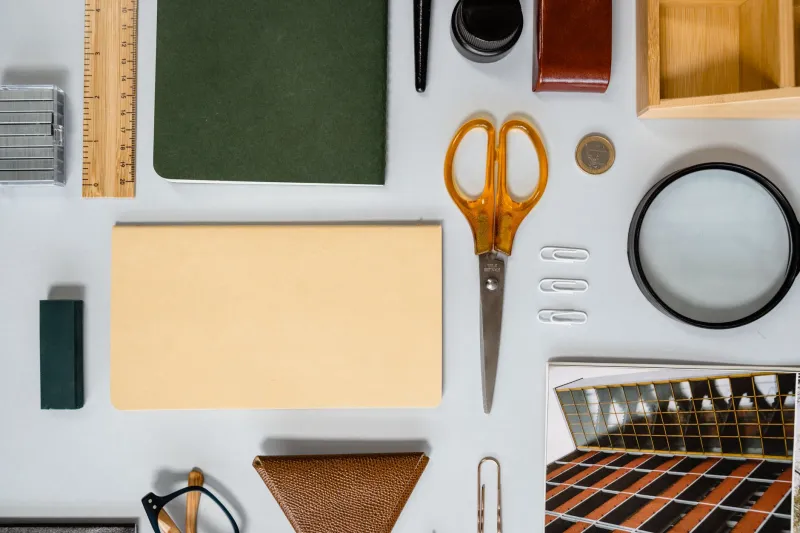
The appeal is also brutally practical. A photocopier in a community centre, a ream of paper from a stationer's, a long-arm stapler borrowed from the school office. A first print run of fifty costs less than a takeaway. You can sell them at cost, or for two quid, or give them away and ask for a donation towards the next one. There is no subscriber model, no platform fee, no dashboard telling you your engagement is down.
And the distribution is beautifully human. Zines move through people. Someone takes ten to a gig and comes back with four and three addresses. Someone else posts one to a pen pal in Dundee. A café leaves a stack by the sugar and it becomes a lending library by accident.
If you fancy making one
- Pick a size you can fold. A4 folded to A5 is the classic for a reason. Print on one side, fold, staple twice. Done.
- Write about the thing you actually know. The bus route. The allotment feud. Your gran's recipes. The pub that used to be a post office. Specific beats general, always.
- Design for photocopying. Black and white, high contrast, no pale greys and no full-bleed photographs. What looks lovely on a screen turns to mud on a machine that hasn't been serviced since March.
- Test the staple. Fold your dummy first, then photocopy the folded pages open, then staple. Skip that order and you will print fifty copies of a book that reads back to front.
- Put your name and a contact on it. Not a QR code on its own — a written email address. Codes fade and phones die.
- Number the run. 'No. 14 of 50' costs nothing and makes a copy feel like an object.
- Do the second issue before the first is finished. Momentum is everything, and nobody's first attempt is their best.
Something to leave behind
The digital fatigue argument gets made a lot, and it is true as far as it goes, but it undersells what is happening. People are not making zines because screens are bad. They are making them because a photocopied booklet is the smallest possible unit of 'I was here, and this is what I noticed, and I thought you should know.'
That impulse is older than printing. It is the same one that put chalk marks on gateposts and names in church registers and initials in wet cement. It just happens to run on forty pence and a stapler this year.
Pick one up next time you see a stack. Take two: one for you, one for someone who will not scroll this far.